
Types of Black Salt
Discover the Different Black Salt Varieties and Their Spiritual Uses
Did you know that not all black salt is created for the same purpose? While many people assume every black salt blend is identical, practitioners often create specialized mixtures for protection, cleansing, banishment, prosperity, and ritual work.
Understanding the different types of black salt can help you choose the right blend for your spiritual practice. Whether you are exploring witches salt, spiritual black salt, or traditional protection salt recipes, this guide will introduce the most common varieties and explain how each is used.
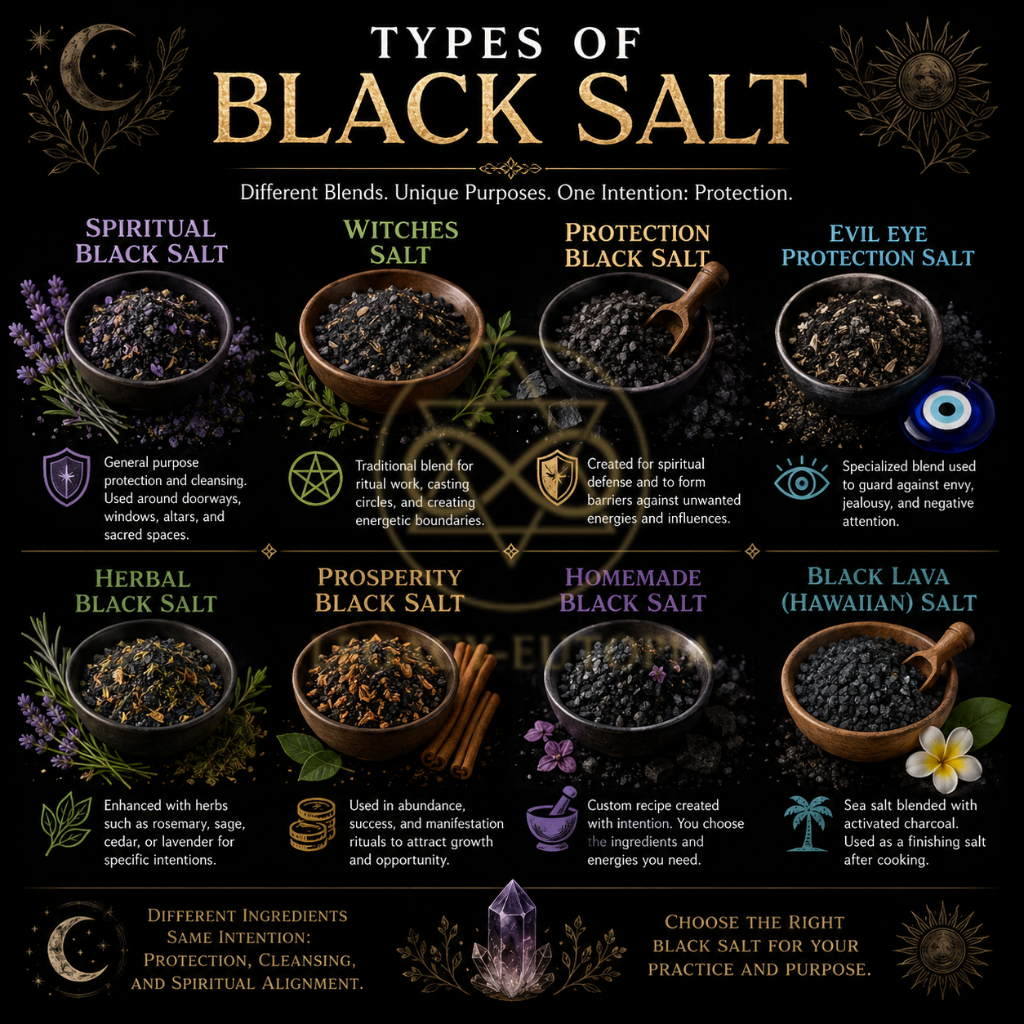
What are the different types of black salt?
Discover spiritual black salt, witches salt, and protection salt varieties for rituals and cleansing.
Understanding Black Salt
Why Different Types of Black Salt Exist
Black salt is not a single recipe. Instead, it is a category of ritual blends that may contain salt, charcoal, ashes, herbs, spices, and other symbolic ingredients.
Different traditions create unique formulas based on their spiritual goals. For example:
- Protection
- Cleansing
- Banishment
- Prosperity
- Home blessing
- Ancestor work
Because of this flexibility, black salt varieties continue to evolve across different spiritual traditions.
Spiritual Black Salt
A General Purpose Protection Blend
Spiritual black salt is one of the most common types of black salt. It is often created for protection, cleansing, and energy work.
Common ingredients may include:
- Sea salt
- Activated charcoal
- Protective herbs
- Black pepper
- Ritual ashes
Many practitioners use spiritual black salt around doorways, windows, altars, and sacred spaces.
For a deeper understanding, see our guide on Spiritual Black Salt.
Kala Namak
Indian Black Salt
Kala Namak is sometimes called Indian Black Salt, volcanic rock salt, Himalayan black salt, kala loon, or sulemani namak. Unlike ritual black salt used in spiritual practices, Kala Namak is a culinary salt commonly used in Indian cuisine and vegan cooking. Traditionally, a sodium chloride salt or Himalayan pink salt is heated to extremely high temperatures and combined with herbs, sulfur compounds, trace sulfates, and natural minerals.
As a result, the unique preparation process transforms the salt’s appearance, aroma, and flavor. Although the crystals often appear pinkish-gray to dark purple, the sulfur content creates a distinctive smell and taste commonly compared to hard-boiled eggs or sulfur springs. Because of this characteristic flavor, Kala Namak is frequently used in vegan recipes to mimic the taste of eggs in dishes such as tofu scrambles, egg-free salads, and plant-based breakfast foods.
Additionally, many chefs value Kala Namak for the depth of flavor it adds to savory dishes. Furthermore, only a small amount is typically needed because the sulfur notes can be quite strong. While it shares the name “black salt,” Kala Namak is primarily a culinary ingredient rather than a protection or ritual salt. Therefore, it is best understood as a specialty seasoning rather than a spiritual tool.
Black Lava Salt
Hawaiian Black Salt
Black Lava Salt, sometimes called Hawaiian Black Salt, is a sea salt blended with activated charcoal. As a result, the salt develops its distinctive black color and dramatic appearance. Unlike traditional table salt, Black Lava Salt is most often used as a finishing salt and is typically added after cooking.
Additionally, many chefs use it to enhance the visual presentation of a dish while adding a subtle mineral flavor. For example, it is commonly sprinkled over seafood, vegetables, salads, and grilled foods. Furthermore, the activated charcoal creates a striking contrast against lighter-colored ingredients. Consequently, Black Lava Salt has become a popular choice in gourmet cooking and modern culinary presentations.
Witches Salt
Traditional Black Salt for Ritual Work
Witches salt is commonly associated with ritual practices and magical traditions. Although recipes vary, the purpose is usually protection and boundary-setting.
Practitioners may use witches salt to:
- Mark ritual circles
- Protect sacred spaces
- Enhance intention work
- Create energetic boundaries
Because traditions vary widely, witches salt formulas often differ from one practitioner to another.
For additional insight, explore our article on Witch Black Salt.
Protection Black Salt
Created for Spiritual Defense
Protection black salt is specifically blended to help create symbolic barriers against unwanted influences.
Many practitioners place protection salt:
- Around property boundaries
- Near entryways
- Under windows
- Around ritual spaces
Additionally, protection black salt is commonly prepared during the waning moon to align with energies of release and protection.
Evil Eye Protection Salt
Specialized Protection Practices
Some black salt blends are created specifically for protection from the evil eye and negative attention.
These blends often include ingredients traditionally associated with protection and purification.
Examples include:
- Protective herbs
- Charcoal
- Sea salt
- Ritual ashes
Many practitioners combine these blends with protective symbols, amulets, and cleansing rituals.
See our guide on Black Salt for Protection from Evil Eye for additional practices.
Herbal Black Salt
Enhanced With Botanical Ingredients
Herbal black salt incorporates additional plant materials chosen for their symbolic properties.
Common herbs include:
- Rosemary
- Sage
- Cedar
- Lavender
- Basil
Each herb contributes its own traditional associations, allowing practitioners to customize the blend for specific intentions.
Prosperity Black Salt
Black Salt for Abundance Work
Although protection is the most common use, some practitioners create prosperity-focused black salt blends.
These recipes may be used during:
- Abundance rituals
- Manifestation practices
- Business blessings
- Financial intention work
The ingredients are often selected to symbolize growth, opportunity, and success.
Homemade Black Salt
Customizing Your Own Blend
Creating homemade black salt allows you to tailor the ingredients to your personal intentions.
Benefits include:
- Full control over ingredients
- Custom herb combinations
- Personalized spiritual meaning
- Fresh preparation
Many practitioners create new batches every six to twelve months, particularly when using black salt regularly in rituals and cleansing work.
Choosing the Right Type of Black Salt
Matching the Blend to Your Intention
Before creating or purchasing black salt, consider the purpose you want it to serve.
Ask yourself:
- Is the goal protection?
- Is cleansing needed?
- Are you creating boundaries?
- Is prosperity the focus?
- Will the blend be used for ritual work?
Your intention often determines which type of black salt is most appropriate.
Key Takeaways
Building a Meaningful Spiritual Practice
The many types of black salt reflect the diverse ways practitioners approach spiritual protection, cleansing, and ritual work. By understanding the purpose behind each variety, you can choose or create a blend that aligns with your personal goals and spiritual path.
Whether you are working with spiritual black salt, witches salt, protection salt, or herbal blends, the most important ingredient remains clear intention. When combined with mindful practice, black salt can become a meaningful part of your spiritual toolkit.
Deepen Your Practice
Explore more symbolic manifestation methods, sacred geometry, and energy-focused practices inside the Sigils and Symbolism category.
Get the Ebook
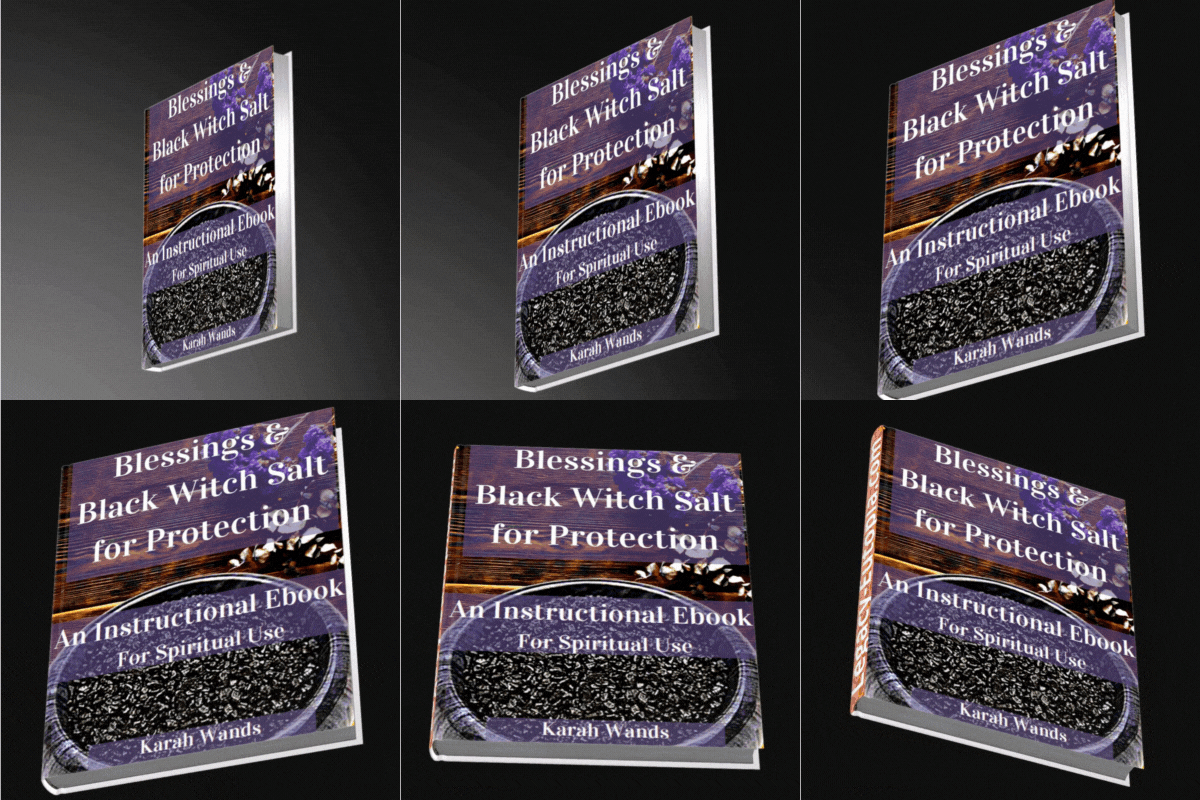
Written by Karah Wands ✨Published by Lunar Wisdom Press ✨A Legacy Eutopia® Publication
Strengthen your ability to direct thought, align energy, and manifest intentionally:
Continue Learning Through Visual Guidance
Explore guided videos and symbolic meditation practices on YouTube to deepen your understanding of sigils, visualization, and symbolic manifestation. You are not reacting to life—you are shaping it. Every thought you direct builds your future.
🌙 Sacred Guidance & Frequencies on YouTube
🧠 The Core Mindset for this post is Protection & Energy Awareness → 🔥 Pathway is Energy Mastery
 20
20 934
934 513
513
 90
90Continue Your Journey
Deepen your understanding and explore the next step in your path.