
Who Is Satan in LaVey’s Philosophy? The Truth Explained
Did Anton LaVey believe Satan came to Earth? Discover the symbolic meaning of Satan in LaVeyan philosophy and its modern influence.
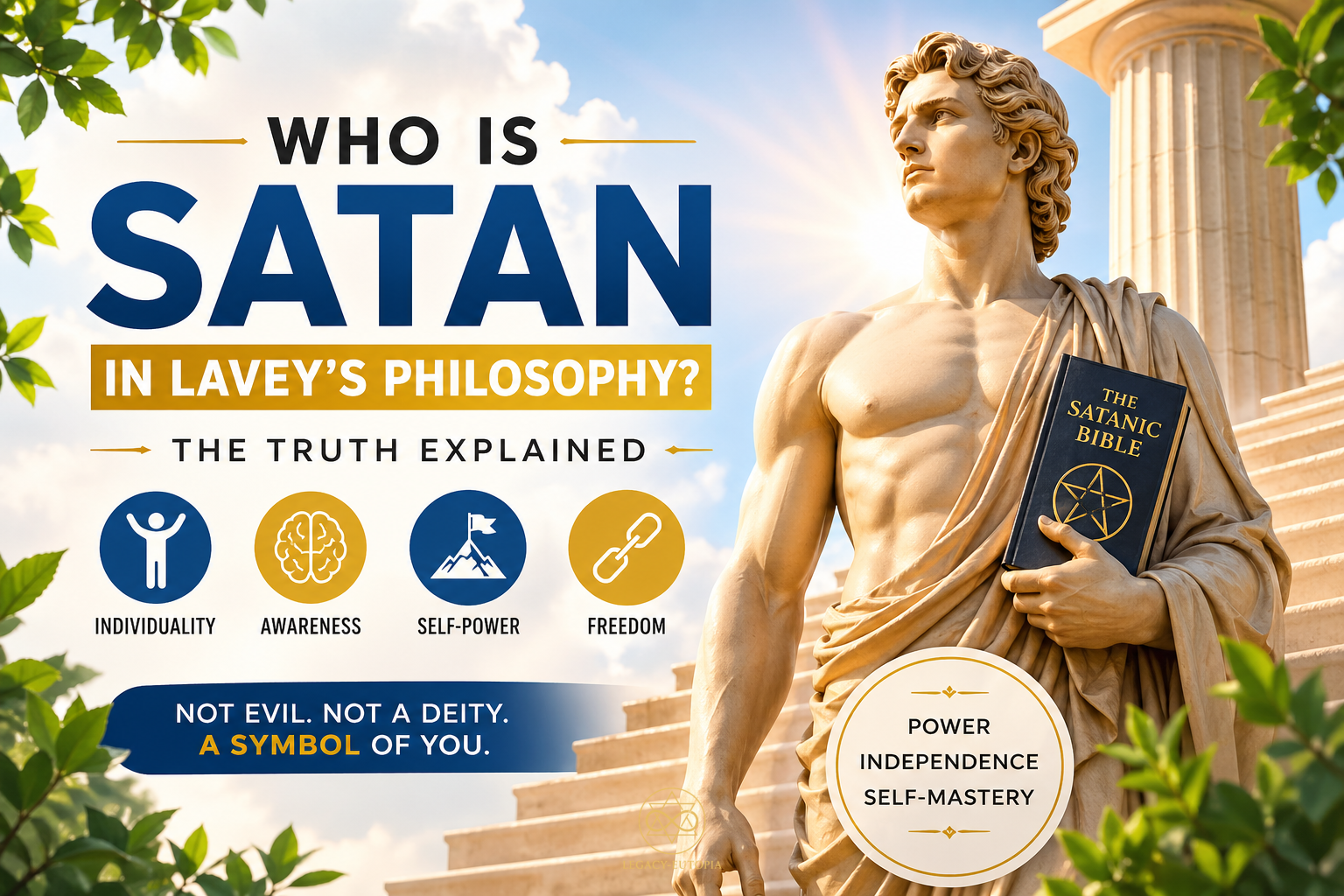
Is Satan a real being—or a misunderstood symbol of human nature?
This question has fueled centuries of debate, fear, and fascination. Yet in modern philosophy—particularly the teachings of Anton LaVey—the answer is far from what most expect.
In this guide, you’ll discover:
- Whether LaVey believed Satan literally came to Earth
- The historical evolution of Satan across cultures
- The symbolic meaning of Satan in LaVeyan philosophy
- How this perspective influences modern ideas of power and identity
By the end, you’ll have a clear understanding of what Satan represents—not as a myth to fear, but as a concept to examine.
Did Anton LaVey Believe Satan Came to Earth?
The short answer is no.
Anton LaVey, founder of the Church of Satan, did not believe Satan was a literal being who walked the Earth.
Instead, LaVey described Satan as:
-
- A symbol of human instinct
- A representation of individual freedom
- A metaphor for self-determined power
In his foundational work, The Satanic Bible, Satan is not worshipped as a deity—but used as a philosophical archetype.
“Satan represents indulgence instead of abstinence.” — Anton LaVey
What This Means
Rather than believing in a supernatural entity, LaVeyan philosophy emphasizes:
- Personal responsibility over external control
- Rational self-interest over blind obedience
- Awareness over submission
This makes LaVeyan Satanism atheistic and symbolic, not theistic.
The Historical Evolution of Satan
Understanding LaVey’s interpretation requires looking at how the concept of Satan developed over time.
Early Origins
The term “Satan” originally meant “adversary” or “accuser.”
In early texts such as the Hebrew Bible:
- Satan was not evil
- Instead, it referred to a role—a challenger or tester
Transformation Over Time
Later, through theological developments in traditions like Christianity, Satan became:
- A symbol of evil
- The opponent of God
- A figure associated with fear and punishment
This transformation was gradual and influenced by cultural, political, and religious narratives.
LaVey’s Reinterpretation
LaVey removed these fear-based layers and reframed Satan as:
- A symbol of rebellion against imposed authority
- A reflection of human nature
- A representation of empowerment rather than evil
Satan as a Symbol of Individual Power
In LaVeyan philosophy, Satan is not something external—it is internal.
Core Symbolic Meanings
Satan represents:
- Independence – Thinking for yourself
- Instinct – Honoring natural desires
- Power – Taking control of your life
- Awareness – Living consciously
This symbolic framework encourages individuals to reject imposed limitations and define their own reality.
Practical Interpretation
Applied to daily life, this philosophy encourages:
- Making decisions based on logic and self-awareness
- Questioning societal expectations
- Taking responsibility for outcomes
- Embracing personal strength
Example
Instead of asking:
“Is this allowed?”The mindset becomes:
“Is this aligned with my goals and values?”
Reclaiming the Adversary
One of LaVey’s most powerful ideas is the redefinition of the adversary.
Traditionally, being an “adversary” is seen as negative.
LaVeyan philosophy reframes it as:
- A critical thinker
- A questioner of systems
- A creator of new perspectives
Why This Matters
Growth often comes from challenging:
- Outdated beliefs
- Social conditioning
- Limiting narratives
By embracing the adversarial role, individuals reclaim:
- Their ability to think independently
- Their authority over personal decisions
- Their power to reshape their reality
Modern Interpretations and Influence
Today, LaVey’s symbolic interpretation of Satan continues to influence discussions around:
- Personal autonomy
- Identity and self-expression
- Spiritual independence
Where This Influence Appears
You can see echoes of this philosophy in:
- Self-development movements
- Psychological empowerment frameworks
- Discussions around personal sovereignty
Important Distinction
Modern interpretations are not about rebellion for its own sake—but about:
- Conscious choice
- Personal responsibility
- Intentional living
Common Questions and Misunderstandings
Despite its philosophical nature, LaVeyan Satanism is often misunderstood.
Misconception #1: Satan is Worshipped
Reality:
Satan is symbolic, not a deity.
Misconception #2: It Promotes Harm
Reality:
The philosophy emphasizes personal responsibility, not chaos.
Misconception #3: It Is Anti-Spiritual
Reality:
It replaces traditional spirituality with self-awareness and autonomy.
FAQ
❓ Did Anton LaVey believe Satan was real?
No. He viewed Satan as a symbolic representation of human nature and personal power.
❓ What does Satan represent in LaVeyan philosophy?
Satan represents independence, instinct, and self-determined authority.
❓ Is LaVeyan Satanism a religion?
Yes, but it is atheistic, focusing on philosophy rather than deity worship.
❓ Why use the symbol of Satan?
The symbol challenges traditional norms and represents rebellion against blind obedience.
❓ Does this philosophy promote negativity?
No. It promotes conscious living, responsibility, and empowerment.
Final Thoughts
So—who is Satan in LaVey’s philosophy?
Not a being.
Not a force of evil.But a symbol of the unapologetic self.
Through this lens, Satan becomes:
- A mirror of human instinct
- A representation of personal authority
- A reminder to think independently
Understanding this perspective shifts the narrative from fear to awareness.
🔑 Key Takeaways
- LaVey did not believe Satan came to Earth
- Satan is a symbol, not a literal entity
- The philosophy emphasizes personal power and responsibility
- The adversary is reframed as a tool for growth
👉 Continue exploring deeper concepts of self-awareness and transformation in your
Inner Architecture category.
🔗 Authoritative External Sources
- Church of Satan (Official site)
- Encyclopedia Britannica – Satan definition & history
- Stanford Encyclopedia of Philosophy – Symbolism and philosophy
Subscribe for weekly spiritual wisdom, meditations, and awakening support ✨
You are not alone on this path. Every step toward awareness brings you closer to the peaceful, empowered version of yourself that’s been waiting to emerge.
 20
20 934
934 513
513
 90
90Continue Your Journey
Deepen your understanding and explore the next step in your path.