Subconscious Programming Through Imagery
How Visual Symbols and Mental Imagery Influence Focus and Awareness
Why do certain images, symbols, colors, and visual experiences leave lasting impressions on the mind? Throughout history, imagery has been used in spiritual traditions, meditation systems, storytelling, advertising, and manifestation practices to influence thought patterns, emotional responses, and subconscious association.
Subconscious programming through imagery explores how visual symbolism, mental imagery, and repeated exposure may influence mindset, focus, emotional awareness, and intentional thinking. From sacred symbols and visualization techniques to manifestation imagery and symbolic environments, visual experiences often shape how people perceive themselves and the world around them.
In this guide, you will learn how subconscious programming through imagery works, the role of visual manifestation and symbolic imagery, practical visualization techniques, and how intentional visual focus may support mindfulness, motivation, and personal transformation.
📌Explore This Page
What Is Subconscious Programming Through Imagery?
Understanding Visual Influence and Mental Association
Subconscious programming through imagery refers to the use of:
- visual symbols,
- mental imagery,
- repeated visual exposure,
- symbolic environments,
- intentional visualization
to reinforce thoughts, emotions, beliefs, and behavioral patterns.
Humans naturally process visual information quickly and emotionally. Images often create stronger subconscious associations than words alone.
Visual Influence Appears In:
- advertising
- spiritual traditions
- meditation practices
- movies and storytelling
- manifestation techniques
- branding and design
Why Imagery Feels Powerful
The subconscious mind responds strongly to:
- repetition,
- emotional imagery,
- symbolic meaning,
- visual contrast,
- pattern recognition.
Because of this, imagery often becomes deeply connected to memory and emotional response.
The Connection Between Imagery and the Subconscious Mind
How Visual Repetition Shapes Awareness
The subconscious mind constantly absorbs information from:
- environments,
- colors,
- symbols,
- media,
- emotional experiences,
- visual patterns.
Repeated exposure to imagery may influence:
- mindset,
- emotional reactions,
- self-perception,
- focus,
- motivation.
Examples of Everyday Visual Programming
- company logos
- social media imagery
- national symbols
- spiritual artwork
- motivational visuals
- entertainment media
Visual Association Builds Meaning
The more emotionally connected a person becomes to an image or symbol, the stronger the subconscious association may feel.
Visualization Techniques and Mental Imagery
Using Mental Imagery for Focus and Intention
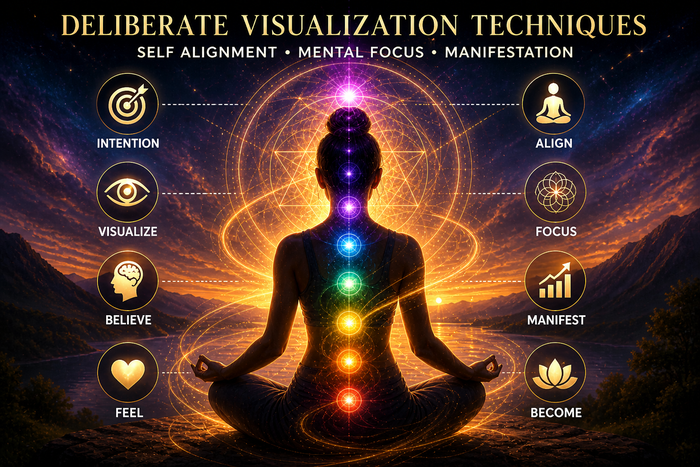
Visualization techniques involve intentionally imagining desired outcomes, emotional states, or symbolic experiences.
Many manifestation and mindfulness practices use visualization to support:
- confidence,
- focus,
- emotional calmness,
- goal awareness,
- motivation.
Common Visualization Techniques
- guided imagery meditation
- mental rehearsal
- symbolic visualization
- affirmation imagery
- vision board practices
- calming mental environments
Why Visualization Is Popular
Mental imagery may help strengthen emotional connection to goals and encourage intentional focus.
Manifestation Symbols and Symbolic Imagery
How Symbols Influence Emotional Focus
Manifestation symbols are commonly used in subconscious imagery practices because symbols naturally create emotional and visual associations.
Common Symbolic Imagery Includes:
- sacred geometry
- spirals
- infinity symbols
- light imagery
- lotus flowers
- Tree of Life symbols
These symbols are often associated with:
- transformation,
- awareness,
- balance,
- growth,
- clarity,
- emotional grounding.
Meaning Creates Emotional Impact
A symbol often becomes more psychologically meaningful through repeated personal association and reflection.
Vision Boards and Environmental Imagery
Creating Visual Environments for Intentional Focus
Many people use environmental imagery to reinforce mindset and motivation.
Common Examples Include:
- vision boards
- inspirational artwork
- affirmation cards
- symbolic wallpapers
- meditation spaces
- meaningful photographs
Why Environment Matters
Visual surroundings can influence:
- mood,
- focus,
- emotional energy,
- concentration,
- motivation.
Intentional Spaces Encourage Awareness
A visually intentional environment may help reinforce mindfulness and personal goals more consistently.
Sacred Geometry and Visual Focus
Geometric Patterns and Mental Awareness
Sacred geometry is frequently used in subconscious imagery practices because repetitive geometric patterns are associated with:
- visual harmony,
- calmness,
- concentration,
- meditative awareness.
Popular Sacred Geometry Symbols
- Flower of Life
- Mandalas
- Spirals
- Metatron’s Cube
- Triangles
These patterns are often used during:
- meditation,
- breathwork,
- visualization,
- symbolic rituals,
- mindfulness exercises.
Why Geometry Feels Calming
Symmetry and repetition naturally encourage visual focus and emotional grounding.
The Psychology Behind Visual Programming
How Imagery Influences Human Behavior
Images affect human psychology through:
- emotional association,
- repetition,
- visual memory,
- symbolic meaning,
- subconscious reinforcement.
Examples appear everywhere in modern life:
- branding,
- film,
- religious imagery,
- social media,
- advertising campaigns.
Visual Practices May Support:
- mindfulness
- emotional awareness
- motivation
- concentration
- self-reflection
Awareness Shapes Interpretation
The way a person emotionally interprets imagery often influences its psychological impact.
Practical Ways to Use Imagery Intentionally
Beginner-Friendly Visualization Practices
Many people incorporate visual techniques into mindfulness or manifestation routines.
Common Practices Include:
- guided visualization
- journaling with imagery
- meditation with symbols
- creating vision boards
- affirmation artwork
- symbolic reflection
Some People Also:
- use calming wallpapers,
- meditate on sacred symbols,
- create intentional creative spaces,
- combine imagery with breathwork.
Consistency Often Matters More Than Complexity
Simple visual practices used regularly may feel more effective than constantly changing techniques.
Common Challenges With Solutions
Visualization Practices
Problem |
Solution |
|---|---|
| Difficulty visualizing clearly | Start with simple imagery |
| Overcomplicating visualization | Focus on one intention at a time |
| Expecting instant results | Practice consistency and patience |
| Becoming distracted easily | Use breathing exercises before visualization |
| Using overwhelming imagery | Choose calming and meaningful visuals |
Balanced Practice Is Important
Subconscious programming through imagery is often most meaningful when approached intentionally and mindfully.
Is Subconscious Programming Through Imagery Spiritual or Psychological?
Different Perspectives on Visual Manifestation
People interpret subconscious imagery practices differently depending on:
- spirituality,
- psychology,
- philosophy,
- mindfulness traditions,
- personal belief.
Some people approach imagery as:
- spiritual visualization,
- symbolic manifestation,
- energetic focus work.
Others use imagery for:
- mindfulness,
- emotional reinforcement,
- mental rehearsal,
- motivation,
- creative visualization.
Both Perspectives Share Similar Principles
- focused attention,
- repetition,
- emotional association,
- intentional awareness.
FAQ SECTION
What is subconscious programming through imagery?
Subconscious programming through imagery involves using visual symbols, mental imagery, and repeated visual exposure to reinforce thoughts, focus, emotions, and intentional awareness.
How does visual imagery affect the subconscious mind?
Visual imagery may influence emotional association, memory, focus, and behavioral patterns through repetition and symbolic meaning.
What are visualization techniques?
Visualization techniques involve mentally imagining goals, emotions, environments, or symbolic experiences to strengthen focus and intentional thinking.
Are manifestation symbols connected to subconscious programming?
Yes. Manifestation symbols are often used because symbols naturally create emotional and visual associations within the mind.
Can beginners practice visualization techniques?
Yes. Simple guided imagery, vision boards, and symbolic meditation are beginner-friendly visualization methods.
Is visual manifestation spiritual or psychological?
Some people approach visualization spiritually, while others view it as mindfulness, motivation, or mental conditioning.
Key Takeaways
Subconscious programming through imagery highlights the powerful relationship between visual experience, emotional association, and intentional awareness. Whether approached spiritually, psychologically, creatively, or meditatively, imagery continues to shape focus, perception, and personal reflection in profound ways.
By exploring visualization techniques, symbolic manifestation, and intentional imagery mindfully, you can develop a deeper connection to focus, awareness, and personal transformation within your daily practice.
Deepen Your Symbolic Practice
ore more manifestation symbols, sacred geometry, and symbolic manifestation techniques inside the Sigils and Symbolism category
Related Posts:
Continue Exploring Visualization and Symbolism
Watch guided visualization videos and symbolic manifestation tutorials to deepen your understanding of subconscious imagery and intentional focus.
You are not reacting to life—you are shaping it. Every thought you direct builds your future.
🌙 Sacred Guidance & Frequencies on YouTube
🧠 The Core Mindset for this post is Energy Protection / Self-Control → 🔥 Pathway is Daily Practice
 20
20 934
934 513
513
 90
90Continue Your Journey
Deepen your understanding and explore the next step in your path.